
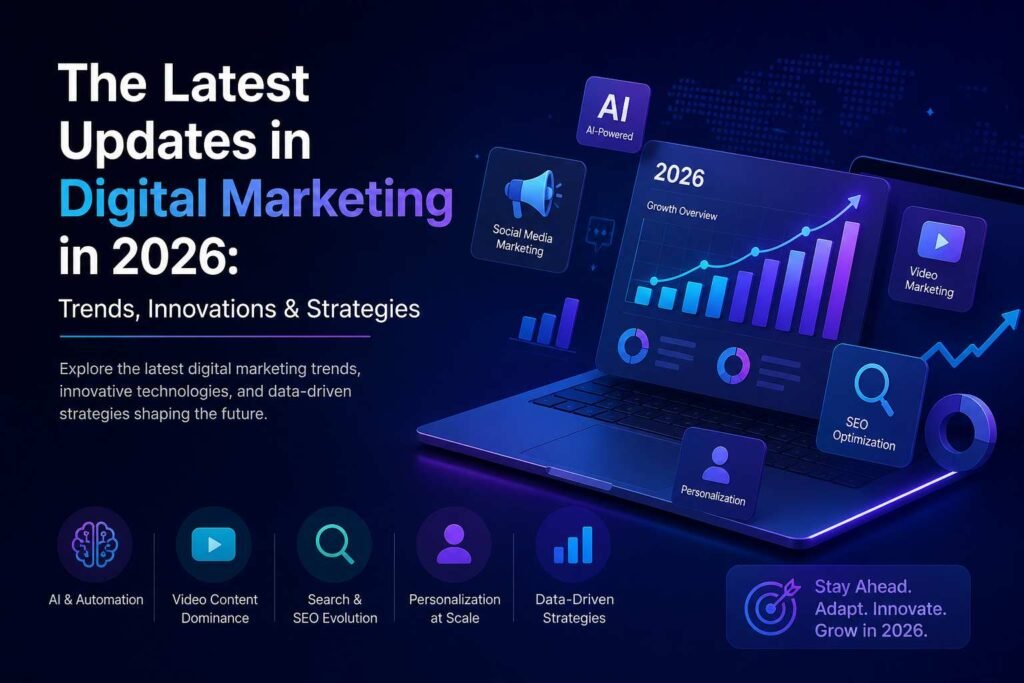
There are many rapid transformations taking place in the realm of digital marketing today due in large part to technological evolution, shifting consumer behaviour, and new forms of communication between brands and consumers for strategies related to conversion and retention.
Digital marketing will eventually (2026) become less about reach and visibility and concentrate more heavily on providing a relevant experience for each consumer’s contact point; establishing community; providing intelligence regarding customer needs and preferences for content.
In this article, we will examine the most important digital marketing trends across various channels including: artificial intelligence, short form video commerce, conversational searches and new marketing strategies implemented by top marketers to gain an edge over competition.
As an entrepreneur/marketer/business owner, you must understand how these developments will affect your ability to compete in the highly competitive online landscape.
1. AI Will Become The Principal Force Behind Digital Marketing.
Artificial intelligences have developed into more than just another means to automate business processes; in 2026, they will have transformed into the principal driving force behind the development of digital marketing strategies for almost all types of businesses. Rather than supporting marketers, they will manage the creation and personalization of content, guide analytics, facilitate optimizations, and eventually assist with the strategic decision making process at scale.
1.1. Marketing Platforms Using AI-Predictive Analytics
Marketing technology has increasingly embraced the use of artificial intelligence for predictive analytics by automating real-time optimization functions and predicting customer behavior (such as conversion rates) and/or upcoming trends through the assessment of customer intent and performance measure trends. As such, brands are increasingly able to estimate when customers will convert; what channels work best with specific customer segments; and what the optimal budgets/bid amounts are for their marketing campaigns proactively (requiring90-95% less resources than traditional reactive marketing continues to do).
1.2. Generative AI as a Collaborative Partner to Marketing Teams
In order to create, develop, execute, and optimize marketing campaigns collaboratively with their creative and data-based partners (i.e., AI), marketers now have access to new-generation generative AI tools that produce copy and/or visual images. These new tools will also provide marketers with tools for developing marketing strategies and measuring the effectiveness of their marketing strategies based on audience intent signals received from multiple data sources within the respective marketing channels. The transition to generative AI systems will result in marketers transitioning from being just users of tools, to becoming creative and data-based strategists that will utilize the true capabilities of artificial intelligence (i.e., systems that can influence the outcome of marketing campaigns).
2. Zero-click searches will dominate the search landscape by 2026.
Zero-click searches provide users with an instant answer through an AI assistant without forcing the user to click on the web page link. This trend will significantly impact traditional search engine optimization and how the marketers of all sizes – including small businesses and global corporations – develop their strategies for maximizing visibility on the web.
2.1. Conversational Search and Keywords Will Disappear
Optimizing web pages to be read and understood by AI is the new normal. With Google’s AI overview page in search results and AI assistants like ChatGPT understanding and mediating how users discover and interact, marketers will have to ensure their content is:
– Structured in a way for the AI to scrape for information
-Providing helpful answers in formats typically generated by AI
– Written as someone would actually speak instead of written This concept is commonly referred to as Generative Engine Optimization (GEO). Marketers and brands should focus on being the source the AI program references in a search result
— not just ranking in the search results.
2.2. AI-Generated Results Dictate Visibility
Traditionally marketers used metrics like page views and click-through rates to measure success; in the future those metrics will relate to AI citations and the prominence of the given result. Therefore, it is critical for marketers to understand that optimizing for web site visibility is only one component of an overall successful content strategy. In the future, marketers will have to not only optimize the web site for search engine visibility but for how search engines will utilize the content provided in search results and summarize that content by citing the content as a source.
Therefore everything from the structure of metadata and content to the tone and readability of content will be altered
3. The Increase of Video and Social Commerce
In 2026, video formats are the basis of digital campaigns, specifically short-form vertical video, which used for discovery, engagement and driving commerce.
3.1. How Short-form Video Drives Commerce
Applications such as TikTok, Instagram Reels and YouTube Shorts have hybridized the gap between entertainment and e-commerce; therefore, brands now use short video clips not only as a medium for brand awareness, but also as the medium through which they create shoppable posts that allow for purchases on their websites.
As a result of this video commerce evolution, there are two primary implications that we can see:
1. There is a decreased distance or time between discovery and the purchase (i.e., you see a product and can immediately purchase it using the retailer’s app).
2. You can convert engagement (academy video views) into direct revenue, creating the key components of a true commerce channel.
3.2. Live and Interactive Shopping Options
Event streaming (via live streaming technology) is often created by live streaming creators and/or influencers, providing a modern and interactive platform where you can view “live” product demonstrations, have interactive discussions on products, and purchase instantly. The level of urgency and community associated with a live stream event cannot be replicated through static advertising method
Similarly, interactive short-form video offers the ability to use polls, stickers, and in-app purchase options, leading to an increase in total interaction and an increase in total revenue from short-form video compared to other forms of static advertising
4. Using Hyper-Personalization and Predictive Paths to Personalize Entire Customer Experiences
Through the evolution and use of Artificial Intelligence, businesses will move beyond simple segmentations and into rapidly tailoring entire customer experiences in-the-moment through the use of rich behavioral data and predictive insights by 2026.
4.1. Providing Contextualized Personalization’s
With AI being able to analyze vast amounts of data on customers, they can create highly personalized experiences for customers across all touchpoints of their journey based on:
Purchase behaviors
Browsing behaviors
Real-time engagement patterns with the brand and other users
Providing this level of personalization increases the relevance of content given to customers, which allows them to further develop their loyalty towards a company or brand.
4.2. Building Predicted Customer Journeys
Thanks to the use of predictive analytics, brands can now predict customer behavior before it occurs by using predictive models to determine how likely their customers will be to perform any of the following actions: Predicted intent of the user
Churn as an active customer?
What offers would help convert them to a buyer, even if they were on the fence?
Which touchpoint or engagement type led their next interaction with the brand?
By integrating these customer behavior predictions into their respective marketing campaigns, marketers are able to optimize every customer journey touchpoint as well as reduce wasted marketing dollars.
5. Creator Economy & Community-Based Strategy
With the emergence of digital marketplaces and online brands, the role of the creator in digital marketing has shifted from being amplifiers of brand content to strategic partners helping to develop brand narratives and encourage deeper engagement.
5.1. Co-Creating with Creators
Influencer marketing is no longer just about posting paid content — in 2026, many brands will utilize creators for co-creation across:
Providing insight into product development;
Coming up with campaign ideas;
Creating limited-edition product collaborations;
and Telling authentic stories about the brand.
Establishing these deeper, creative partnerships will allow for a greater sense of authenticity, affinity for specific niches, and stronger community bonds, all of which can translate into sales.
5.2. Community as a Competitive Advantage
Whether they’re on Discord, niche-specific online forums or each brand’s customized group, communities represent an audience who will have a higher degree of engagement and loyalty than audiences obtained through traditional marketing.
Brands that invest in building communities will achieve: Improved customer feedback loops;
Increased repeat purchases;
and Greater levels of advocacy and referrals.
The shift from targeting mass audiences to engaging with niche communities is redefining how success is measured in the digital marketplace, moving away from standard measurements such as number of followers, impressions and likes, to measuring the degree of community engagement.
6. there are no separate channels anymore in 2026
and the marketing world is now all about creating a seamless omnichannel experience for customers to have consistent user journeys across all platforms and devices.
6.1. Integration instead of soloing integrations
Successful brands combine their Digital Marketing channels; search, social, email, content marketing, CRM, and automation, and AI assistants into one cohesive system for tracking all interaction to optimize the engagement of the customer holistically.
6.2. Synchronized Messaging and Touchpoints
When brands are consistent across touchpoints, they help to develop trust and reduce friction when interacting with customers. Customers expect companies to be able to ‘remember’ who they are regardless of which platform they have used to interact with the brand: email, social direct message, chat assistant, or direct search.
For example, additional workflows are now triggered in real-time based on an individual’s interaction along with other signals received via different channels. After someone has viewed your video, you will see retargeting ads, or you will receive a personalized offer based with the searches you just made.
7. New Metrics and KPIs for a New Era
The traditional KPI’s of page views and clicks are not sufficient in 2026. Therefore, marketing professionals will need to start using additional performance indicators to help measure how successful their Digital Marketing activities have been, including the following:
AI Visibility Scores (how many times your content has been referenced by AI)
Zero-Click Engagement Impact
Predictive Likelihood for Conversion
Community Engagement Metrics
Lifetime Value Increase of Personalization
These metrics will give marketers a clearer insight into how their brands have influenced customers at all stages of the customer journey.
Summary: Future of Digital Marketing | 2026
Digital marketing in 2026 will consist of mastering intelligence, integration and connection. This is evident through the continued prevalence of AI as a primary strategic tool, as well as trends towards using video commerce, conversational search, community engagement and building a unified customer experience — all of which require marketers to demonstrate agility, creativity and innovation with a customer-first approach.
Brands will succeed by:
Utilizing AI as a long-term partner rather than merely as a technology
Optimizing for both AI discovery (for instance through search engines) and zero click activity (for instance by developing ways for users to find what they’re looking for without clicking through a search result)
Creating immersive experiences that foster loyalty via customer engagement
Fostering the creation of communities and establishing real partner relationships with 3rd party creators
Measuring the overall effectiveness of their efforts against not only traditional metrics (such as impressions), but also against next-generation key performance indicators (KPIs).
Therefore, staying ahead of competition in 2026 requires understanding the fundamental nature of digital marketers as well as how technology will alter the ways in which customers engage and interact with brands digitally. Moving forward is dependent on companies adopting intelligence, personalization and strategic integration as the foundation upon which successful marketing endeavors will be built.