
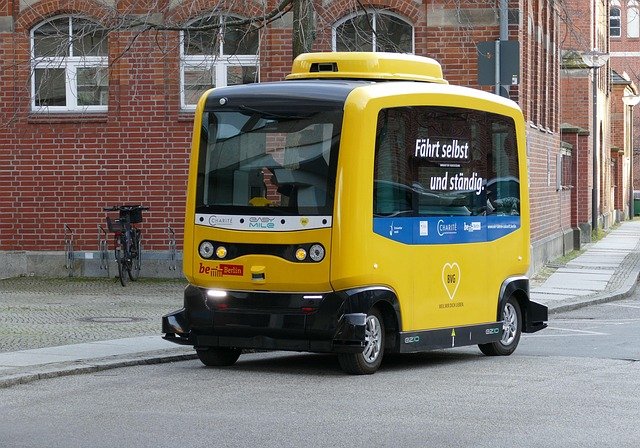
Self-driving cars (or autonomous vehicles, or AVs) are changing how we will transport ourselves in the future. These originally only existed as prototypes or in controlled testing environments; however, they now exist and are being operated on public roadways in various countries around the world. In addition, many different businesses, regulators, and consumers are trying to navigate all of the exciting opportunities and challenges associated with not only the rapid advancement of self-driving technology; but also how the legal framework relating to self-driving cars will evolve going forward. We will explore both current developments in the technology behind self-driving cars, as well as the evolving legal frameworks affecting their adoption globally.
Self-Driving Car Technology Updates
Commercial Robotaxi Service Growth
One of the most interesting developments in 2026 is the commercialization of robotaxi services and the increasing number of companies deploying fully autonomous ride-hailing fleets in urbanizing areas of the United States, Canada, Europe and Asia. The goal of these services is to lower the cost of transportation for users, increase the efficiency of the transportation system, and reduce the amount of human error that exists when human drivers operate vehicles.
Major technology companies and automobile manufacturers are continuing to invest significant amounts of money into this area, with pilot programs expanding into new cities throughout North America, Europe, and Asia. Thanks to advances made in artificial intelligence, real time mapping and sensor fusion, robotaxis now have the ability to successfully navigate the complexities associated with driving in urbanized environments.
This is important because the move from an experimental project to an economically viable business presents a whole new level of challenges for the autonomous vehicle marketplace; however, scalability remains an issue within the marketplace, primarily due to infrastructure limitations and regulatory issues.
Development of Self-Driving Technologies
Self-driving vehicles can be categorized into 6 Autonomous Driving Levels, starting with 0, which has no automated features, and increasing to a fully automated form at Level 5.
In recent years, higher level 2 systems, such as advanced driver assistance systems (ADAS), have become very commonplace in consumer vehicles. There now appears to be a great movement toward higher level 3 systems, which will permit vehicle operators to take their eyes off the roadway for extended periods of time, and ultimately to level 4 systems will operate autonomously in dedicated areas without any input from a vehicle operator.
The announcement by automobile manufacturers of their plans to produce vehicles that will have level 3 features is a major step toward deploying this technology.
The advancements in self-driving technology are driven by advances in several areas, including machine learning, LiDAR sensors, radar systems, and high-performance computing. As a result, a self-driving system can detect and interpret more complex traffic scenarios, identify pedestrians, and respond to a wider variety of unpredictable events with an increasing degree of accuracy.
Integration with the Smart City and Infrastructure
Another major trend is the convergence of self-driving vehicles with smart city infrastructure. Governments all over the world are investing in connected transportation systems, allowing vehicles to communicate with traffic signals, roadway sensors, and other vehicles.
The enhancement of V2X (vehicle to everything) communication will provide a safer and more efficient transportation system by decreasing traffic congestion and allowing for real-time decision making. As a result, cities that have smart infrastructure will be more likely to be early adopters of this emerging technology.
Nonetheless, the successful implementation of this kind of integration will require a great deal of investment and coordination between the public and private sectors; therefore, it could take longer than needed to go into widespread use.
Liability and Responsibility Problems for Driverless Vehicles
Among the most complex legal questions relating to driverless cars activity is liability. In a conventional car accident, often the person behind the wheel is at fault; yet, when the entire process is automated, determining who is at fault becomes far more difficult.
In the event that a driverless vehicle is engaged in an accident, who is responsible? The maker/manufacturer of the vehicle? The creator/developer of the self-driving software? The owner of the driverless vehicle? Or the drivers (i.e. passengers) of the driverless vehicle? Each of these questions remains largely ambiguous within many legal jurisdictions today.
Legal systems are currently re-evaluating liability frameworks in order to account for these automated decision-making processes. Some proposals have suggested shifting liability onto manufacturers or moving toward a model of shared liability.
Diverse Regulations
Another significant challenge that exists in relation to driverless vehicle usage and deployment is the absence of uniform laws/rules within/throughout different geographical areas. Within/via different countries worldwide and between neighbouring states within a single country, there are sometimes major differences between laws governing the testing and launching of driverless vehicles.
This kind of diversity createsless certainty for companies considering expanding their business presence globally. Additionally, this affects the overall innovation of driverless vehicle applications, as the developers of such applications must also comply with different legal compliance standards in order to bring their products to market.
Work is continuing towards creating international standards, which will be difficult to agree on because of varying laws, priorities (for safety), and financial incentives.
Concerns Regarding Data Security and Privacy
Autonomous vehicles are dependent on data, such as their real-time locations; the input from their sensors; as well as their users’ habits. This dependence brings with it a great deal of concern about how that data will be used and if it has been hacked.
Autonomous vehicles are also seen as an attractive target for cybercriminals, whose activity could jeopardise the safety of these vehicles, and lead to the loss of confidence in the vehicles as a mode of transportation. Governments are requiring businesses operating with customers’ data to have robust cybersecurity measures and data protection policies in place.
Regulatory policy must also define how the data is collected, stored, and used. Policymakers have to strike a balance between innovative technologies and having measures in place to protect consumers’ privacy.
Making Ethical Decisions
Autonomous vehicles must be programmed to make decisions when confronted with complicated, sometimes ethically confusing, situations. For example, if two cars can be in an accident and there is no way of avoiding the accident, how should the cars be programmed to respond?
These programmatic ethical dilemmas create both technical and legal challenges for developers, who must design algorithms that reflect the moral values of society, and for regulators, who must establish a set of best practices to guide their actions and enhance accountability.
The lack of easily understood recommendations related to how autonomous vehicles should ethically make decisions will make it difficult for people to accept such vehicles.
Industry Responses to Government Regulation
Legal Framework for Autonomous Vehicles Emerging
Governments all around the world are beginning to establish thorough legal frameworks for autonomous vehicles. These frameworks create regulations regarding safety, liability, and operations.
Some countries have already introduced legislation to permit self-driving vehicles to access public roads as long as certain conditions are met. Other countries are experimenting with pilot projects in order to determine regulatory mechanisms before implementing full scale regulation of such vehicles.
Creating these frameworks is critical for a stable regulatory environment that will guide innovation while assuring the safety of the public.
Collaboration Between Different Sectors of Industry
Manufacturers of vehicles and manufacturers of technology are collaborating with each other in ways to solve both technical and legal issues associated with autonomous vehicles. Collaboration between manufacturers, software developers and regulatory agencies has become common place.
As well as collaboration, the different industries are establishing safest practices and a common set of safety standards for autonomous vehicles to further the goal of developing the necessary technical expertise that will allow them to grow, and provide a common base for developing autonomous vehicle technology throughout the world.
The Future of Autonomous Vehicles
A New Paradigm of Transportation
The introduction of autonomous vehicles will revolutionize the way we move around the world. They will decrease the number of vehicular accidents, provide improved mobility to seniors and people with disabilities, and decrease the cost of transportation.
In addition, autonomous vehicles will change urban planning by eliminating the need for parking and increasing the efficiency of the existing transportation infrastructure.
Remaining Obstacles
Although we have made great strides toward achieving self-driving vehicles, there are still many challenges to overcome. The ongoing challenges of legal ambiguity, high cost of development, and public skepticism will continue to affect the rate of market entry for self-driving vehicles.
One of the most important things that will help drive the adoption of this technology will be the establishment of trust between the consumer and the self-driving vehicle. For consumers to trust that this vehicle technology is safe, reliable, and secure, they must first establish a level of confidence in themselves and their ability to control the vehicle.
In Summary
Self-driving vehicles have reached a significant milestone as they approach the year 2026. The advancements in technology will enable us to create a fully automated transportation system, however, the legal systems are struggling to keep up with the rate of growth of technology. The relationship between technological innovation and the regulation of such innovation will ultimately dictate the speed and manner in which autonomous vehicles enter the marketplace and have an impact on day-to-day life.
As businesses, individuals, and governments continue to transform their own realities into this new world of mobility, one thing is clear…the path to autonomous mobility will be as much a legal issue as it is a technological issue.

Good article