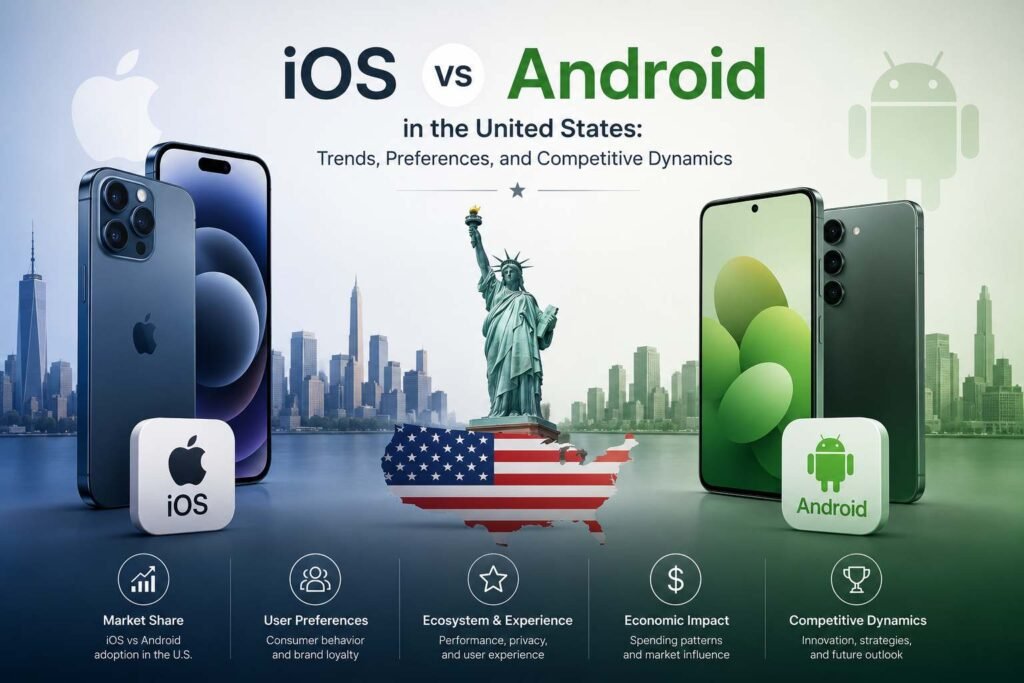
The current smartphone operating system environment in the U.S. is one of the most exciting and competitive areas of technology today. Two key competing ecosystems currently dominate the marketplace: (Android, created by Google) and (iOS, created by Apple). Android holds a dominant global position with regard to market share, and the U.S. represents an interesting and somewhat inverse reality where iOS has a stronghold or shares the majority of the market with Android.
To understand how this occurs, we need to go beyond basic market share data, to explore the broader cultural influences, economic conditions, ecosystem strategies, perceptions of security, developer preferences and innovation drivers that will continue to affect both ecosystems in the U.S. marketplace.
Market Share and Adoption of Smartphones in the U.S.
The U.S. is a Unique Market Place
Globally, the total market share for Android devices is over 70 percent; however, the U.S. represents an aberration. Due to the strong branding of their products, premium pricing strategies and extensive ecosystem integration, Apple has captured a large segment of users in the U.S. as well. Over the past few years, Apple has maintained a share of roughly 55–60 percent and Android has had approximately 40–45 percent share in the U.S. smartphone market.
The differences between the two segments can be attributed, in part, to several influential elements:
Premium pricing in the United States where consumers have more disposable income
Carrier-related support of the Apple product line
Cultural perception of prestige via the iPhone
Seamless integration of the Apple ecosystem across Apple devices.
For information about Apple’s product and ecosystem, click here to visit the Apple official website.
For information about the Android platform, click here to visit the Android official platform page.
Strength of the Ecosystem: Integration vs Flexibility
Apple has clearly benefited from having a closed and integrated ecosystem among their products. The ability for an iPhone, iPad, Mac, Apple Watch and AirPods to seamlessly communicate through services like AirDrop, iMessage, and Continuity, create an experience that leads many users to remain loyal to the Apple ecosystem.
The advantages offered by the Apple ecosystem include:
The seamless synchronization of devices within the Apple ecosystem
The exclusive availability of services like iMessage and FaceTime
The strong privacy brand associated with Apple, and
The promise of long-term support through software upgrades.
In the United States of America, where the iMessage service is widely considered to be an integral social aspect of youth culture, the incentive for Apple users to remain beholden to the Apple ecosystem is extremely high.
The Flexibility of the Android Ecosystem
Conversely, the Android operating system has taken full advantage of the diversity and openness of the operating system. Many manufacturers produce devices, including but not limited to, Samsung, Google Pixel, OnePlus, and Motorola.
The advantages of the Android ecosystem include the following:
A wide array of devices that can be found at every price point
The ability to customize an Android device to the user’s specifications
Strong integration with Google services, and
Faster cycles of innovation on hardware compared to competitors.
Unlike Apple’s closed ecosystem, Android offers considerable customization possibilities for both users and manufacturers. Consequently, Android devices generally appeal to tech-savvy consumers and budget-conscience shoppers.
Hardware Diversity Vs. Premium Consistency
iOS = Controlled Hardware Experience
By controlling both hardware and software, Apple is able to offer:
Optimized Performance
Consistent User Experience
Predictable Updates
All model iPhone’s have been purposely built to work together seamlessly with iOS. Hence, the fragmentation issue does not exist.
Android = Diverse Hardware Landscape
There are many different types of Android devices available—most notably budget-friendly smartphones under $200 and high-end flagship phones that cost over $1,000.
Advantages:
Affordable rates across different income level consumers
Rapid innovation (e.g., foldable devices; high refresh rates)
Very competitive pricing
Disadvantages
Fragmented devices and OS versions
Inconsistent upgrade schedules
User Demographics & Cultural Influences
iOS = America as a Social Identity
In America, owning an iPhone is typically viewed as being very social; the physical aspect of iOS has created significant social pressure among teenagers (i.e., blue messages in iMessage).
iPhone Users
Overall iPhone users encompass many demographics; however:
iPhone Users are Young – Bigger percentage of iPhone users are under 35 years old than Android users.
Social Influence – On average, social pressure significantly influences most people’s decision making process.
Apple Brand Identity – Apple has a very strong image in America and has been labeled as a premium product; thus, this contributes to its perceived value and brand loyalty.
Android Users = Diversity
Android users tend to be:
More Price-Conscious
More Technology Oriented
More Interested in Customisation
Android users are likely to give priority to functionality over brand identity.
The App Ecosystem and Developer Perspective
iOS is the Developer’s Platform of Choice
Developers will always prefer to develop for iOS because:
- Higher revenue from each user
- Less fragmentation
- Faster adoption of new iOS versions
For that reason, most developers launch their Apps first on the iOS platform because of profitability and consistency.
Android: Scale and Global Reach
Android is the best option when looking to reach the largest audience globally. This is essential to the developer’s success when creating:
- Mass market Apps;
- Penetration into Emerging Markets; and
- Creating a wide variety of test environments.
However, they will need to work with differing hardware configurations and OS versions across a wide variety of device screen sizes.
Perception of Security & Privacy
Apple is known as the Privacy Leader through its marketing strategy. The creation of features such as App Tracking Transparency and on-device processing are testaments to this.
Benefits of Apple’s marketing emphasis on user privacy:
- Strong user trust will always be present.
- Users will share little if any personal data.
- User simplicity in understanding their privacy settings.
Android has significantly improved its security over time through the introduction of:
- Google Play Protect;
- Regularly updating security patches; and
- Improved permission controls.
However, the open nature of the Android operating system still causes some users to have some level of concern.
Software Update Longevity
iOS is the leader in providing long term support for all devices via software updates. iOS devices will receive 5 – 6 years of software updates providing:
- Supports for many more years,
- Continued Long Term Security, and
- Continued access to all of the newest features.
Android has shown improvements in recent years with respect to software updates; however, as manufactures of the Android Operating System continue to provide updates at different rates, there is still a high amount of fragmentation.
Innovation and Feature Evolution
Android Innovation
– Industry Pioneers while Features are a Secondary Focus
Android Makers have been the ones to lead the way in terms of new technology advancements within the smartphone industry. Android has created:
Foldable cell phones
High-refresh-rate displays
Fast charging capabilities
Under-the-display cameras
Apple Innovation
– Quick Welcomes and Extensive Refinements
Apple has always waited until others have created the technology and redone their technology before they introduce something to the public. Examples of this are:
Face ID
M-series chips
Ecosystem-driven discoveries
Phone Pricing and Customer Choices
Apple Premium Pricing Includes Very Few “Budget” Options
Apple has a very strict premium pricing policy, leaving very few budget alternatives for consumers (e.g., the iPhone SE).
Android Wide Pricing Options
Android offers every type of pricing on smartphones, creating an opportunity for everyone to purchase a smartphone.
Carriers and Smartphone Delivery Systems
In the United States, carriers, like Verizon, AT&T, and T-Mobile, have played a primary role in delivering smartphones to consumers.
Apple Carrier Partnership Strength
Apple is considered to be one of the best companies in terms of delivery because:
Priority in store placements
Available Attractive Financing Alternatives
Trade-in Programs
Androids Broad Delivery Network
Because Android manufacturers have so many different brands, there is no singular company who controls deliverability; therefore, marketing becomes diluted based on the number of manufacturers.
Brand Loyalty and Retention Rates
High Brand Loyalty and Retention Consumer Based Retail
Apple currently has the highest rates of customer retention, with greater than 90% ensuring consumers will continue to purchase their products.
Greater Switching Alternatives
Android consumers have greater alternatives when making future purchasing decisions and switching brands because:
Diverse selection of devices
Price sensitive consumers looking for alternatives
Limited Ecosystem dependencies.
The Functions of Service and Subscriptions
Apple’s Services Eco-System
Apple makes a lot of money from its services, like:
iTunes
iCloud
Apple TV+
Service Integration for Google
Google has many services integrated with their Android platform (like):
Gmail
Google Drive
YouTube
All these services are available on the Apple iOS platform, so the consumer can use the service on both platforms.
Companies and Enterprise Adopting Apple
The iPhone is a heavily used phone in corporate environments (due to):
Security
Consistency
Device Mgmt. Software
Android making strides within the Enterprise space with:
Android Enterprise Solutions
Absolute custom device settings
The Future of AI, Ecosystems and All Things Beyond
AI Integration
Both Apple and Google have invested heavily in AI (Original Equipment Manufacturers):
Google has invested in building-out their AI assistants and on-device machine learning.
Apple has invested in making sure the way they provide artificial intelligence functionality is done with privacy in mind.
Expanding Ecosystems Globally
The next phase of competition between Apple and Google will take place outside of the smartphone:
Wearables
Smart Homes
Augmented Reality
Conclusion: Two Different Worlds
The battle between Android and iOS in the U.S. is not just a battle over which is better or which has the most features. It’s much bigger than that.
Apple’s iPhone has presented a complete, seamless experience through their many products (i.e. iPhone, iPad, iTunes, iWork, etc.) with a strong brand identity and solid customer loyalty. Android has been able to develop its ecosystem using flexibility, innovation, and access to more devices and other technology.
Apple’s premium pricing model and strategy of creating an integrated ecosystem that locks customers into their products have worked very well in the U.S. Android has continued to innovate quickly and add to their ecosystem using options available from many different companies. As new technology develops, especially around artificial intelligence, wearable technology and immersive experiences, it is possible that the competition between Android and iOS could change over time. Nonetheless, the contest between Android and iOS will play a major role in determining where mobile computing will be in the future in the U.S.