
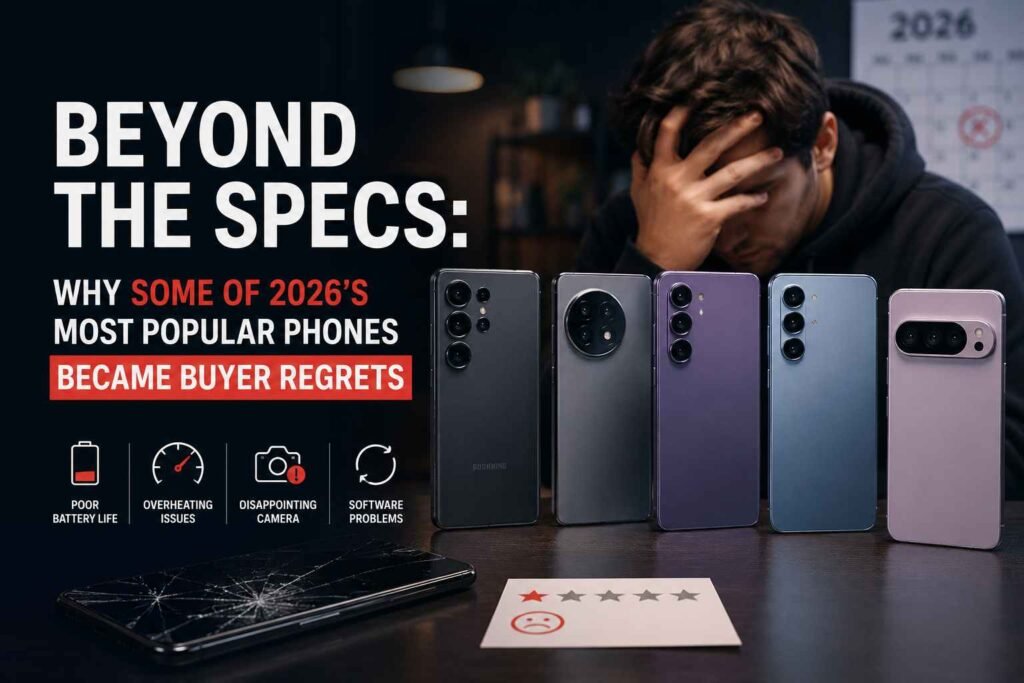
The smartphone industry has experienced another year filled with innovative advancements and bold claims, both of which have resulted in disappointed consumers in 2026. Many of the top manufacturers continue to release new flagship devices each year, yet not every flagship device lives up to consumer expectations. More and more consumers are reporting episodes of buyer’s remorse with regard to their smartphone purchases as a result of issues like bad batteries or misleading marketing.
In this article, we will look at which smartphones most consumers in America will likely regret purchasing this year and why they feel that way through examining user feedback, performance metrics and overall trends in the industry to determine why these products failed to deliver on the promises made at launch as well as what potential buyers should take into consideration prior to purchasing a phone from a particular manufacturer or retailer.
Buyer’s Remorse on the Rise
Expectations vs. Reality
The marketing of modern smartphones portrays these devices as all-in-one devices (productivity, entertainment, and AI personal assistants). However, the gap between what is being marketed to consumers versus what is actually delivered in the real world is growing wider each year. Consumers are not looking just at the specifications of a smartphone; instead they are looking at how well the device performs in everyday life over time and whether they will receive good value for their dollar.
In 2026, many smartphones failed to meet consumers’ expectations when it came to:
Battery life (with consumers disappointed by actual performance versus the larger capacity advertised)
Artificial intelligence (AI) features are perceived more as gimmicks than as actual usefulness
Software updates that are creating additional bugs rather than making any improvements to existing features or functions of the device
The Power of Hype in Marketing
Marketing often gives exaggerated descriptions or exaggerated marketing campaigns when promoting hardware or services. Hype is invoked for things like “game changing photography using AI” or “battery that lasts all day” before you actually get to use them in your day-to-day activities, which leads to disappointing results.
America’s Most Regretted Mobile Devices in 2026
1. High-end Flagship Smartphones That Had Way Too Much Marketing
Performance How Much For a Little Performance
Almost all the high-end flagship smartphones that were sold in 2026 had the latest processors; however, they also suffered from slow performance because of extreme throttling capabilities and poor power consumption capabilities. Reports indicated that their performance was degraded when engaged in gaming, shooting video and even doing regular multi-tasking.
Concerns About Battery Life
Many high-end flagship phones claimed to be using much larger batteries; however, these units displayed fluctuating battery life. The major reason being the overall degree to which they were utilizing extensive software features based on AI that were consuming battery.
Price Compared To Value
With MSRP of most smartphone (‘flagship’ grade) price points exceeding $1,200, it’s understandable to have a high expectation of performance; however, if these devices do not deliver consistent performance, regret inevitably follows.
2.Foldable Smartphones! New Technology, But What a Price To Pay.
Durability Issues
Foldable smartphones are certainly being publicly received; however, durability remains a concern since:
The creases in foldable smartphone screens were visible after extended usage
The hinge mechanisms are working loose over time
Increased susceptibility to being damaged due to dirt piles up after extended usage
The cost of repairing foldable displays is out of sight compared to the cost of repairing a standard smartphone.
Software Optimization Problems
Many of the mobile apps supported by foldable smartphones cannot generate the same user experience on foldable smartphones as they did on standard smartphones.
3. Mid-Range Devices With Deceptive Marketing
“Flagship Killer” That Never Happened
Mid-range phones that were supposed to compete with flagships, failed to live up to the promise because of:
Helplessly under-performing real-world usage despite impressive specifications
Inferior photography quality because of poor processing
Unreliable long-lasting firmware/software support
Quality sacrificed for price (material)
Manufacturers typically substitute inferior materials in order to reduce price, which will hurt the long-term durability and longevity of these devices.
4. Budget Devices That Have Too Much Compromising
Stuck Without Speed
In 2026, budget-handsets had many performance issues that caused:
Apps took way too long to load when using with device
Limited Memory which did not allow for more than one of either open or run – (limited Multitasking)
Non-Satisfactory speed of storage devices (2nd rate)
Limited Software Life Span
Most budget (new) phone owners had few updates to their software, causing their devices to become obsolete faster than expected.
Two Main Reasons Why Consumers Regret Their Purchase
1. Battery Life & Power Management
Consumers continue to complain about their device’s battery health; however, even the newest phone model with cutting-edge battery technology will experience poor battery recovery times because:
High-refreshed rate display
AI processes running when you are not using device
A poorly designed chipset
2. Software Bugs (Ferrari came second!)
Scheduled phone updates by the company to enhance both device performance were many times (more than expected) deposited into the users’ device and left devices unusable due to:
Total shutdown of operating system (OS) while using
Inability to run or use applications because of compatibility conflict with the OS
Reduced performance
3. AI As Main Selling Point
In 2026, AIs became the next big thing, but because of their “useful” features many times ended up not being used after receiving a thorough value assessment (users reported AND).
Battery loss by AI tools
Limited number of times feature was used after the initial trial run
Very little improvement in performance was gained from using AIs vs. standard methods of doing things.
4. Long-Term Support Concerns
As more consumers become aware of how long their software will last, we have seen an increase in the number of consumers turning away from products if they do not have at least a 4-year or 5-year guarantee for software updates for the product.
How Consumer Ratings and Social Media Impact Long-Term Support
Social Media is Providing a Level of Transparency to Users.
The rise of online communities and platforms such as Reddit, YouTube, and other technology-related forums have empowered many users in voicing their opinions. Negative experiences shared on these sites will travel fast to other consumers and will affect consumer purchasing decisions on similar products.
The Problem with Review Inflation
Some of the reviews posted in the first few days after a product is released are overly positive, as the reviewer may not have had enough time to fully test the product before submitting their review. The true problems with the product may not be reported until weeks or months after the product is released.
What Went Wrong
Case 1: The Overheated Flagship Product
A flagship phone product was released with the latest high-end processor, but the phone does not have an adequate cooling system. Within weeks of the product being released, users attributed to the following problems with their products: 1) significant overheating, 2) performance drop while gaming, and 3) battery drain. These issues led to media and user backlash against the product and significant reduction in the resale value of the product.
Case 2: Foldable with a Fragile Design
This highly anticipated foldable cellular phone product was released but experienced issues with their hinges, and screens cracked within months of being used. These issues significantly diminished the products expected reliability despite the product’s premium pricing.
Case 3: Mid-Range Disappointment
This Mid-Range cellular phone product was promoted as a “flagship killer” but had several issues including the camera and slow performance, with the majority of complaints being made for these issues.
How To Prevent Regretting Once You Have Bought It
1. Do Not Buy Right Away
Wait for product launches to finish, so that:
-You have time to read independent reviews
-The product can be upgraded to fix software problems and run better than the original out of the box;
2. Purchase Based on Actual Performance
Before buying any electronic device, look at:
-Battery test results
-Long-term user reports of how it performs
-Thermal performance;
3. Determine How Much Support You Will Get For Software
Pick a manufacturer whose products come with extended support for their software and will provide frequent updates and security patches to keep your product secure.
4. Watch Out For Features That Sound Good, But Have Little Real-world Benefit
These features may not be as great as advertised and will not be worth the extra money you paid for them.
Trends Influencing Consumer Satisfaction
Eco-Friendly Products
The more durable, reusable, and repairable the product, the more important it is than a “shiny new object.”
Longer Time Between Upgrades
As prices for electronic devices rise, consumers keep their devices longer, making durability more important than before;
Brands With Transparent Marketing
Companies that are honest about their products and provide reasonable estimates can be trusted and develop strong brands;
How Consumers Will Make Decisions About Buying Smartphones In The Future
More Informed Consumers
Today’s consumers are much better informed and will conduct extensive research before deciding on a purchase.
Ecosystem Compatibility
Devices that work well with other devices, such as mobile phones with smart watches, laptops and smart homes, have higher levels of satisfaction.
AI That Works
The success of future devices will be determined by the extent and usability of AI technology without compromising the device’s performance.
Summary
As of 2026, the phones Americans retreat buying had in common poor marketing (and thus, overpriced), bad actual performance compared to what they were promoted with and were not built for any long term use. Consumers must also take time to examine phones before purchase, otherwise there is a greater chance of suffering from “buyer’s remorse”.
As the smartphone industry matures, manufacturers must focus their attention on providing their customers with consistent, honest and high-quality user experiences, rather than on coming up with new and flashy ideas to sell (or invent) new products.
Finally, the best phone is not the one that is the best or has the most features, but rather the one that you can count on consistently each day.